

 Spain
 Portugal
 Ecuador
 France
 South Africa
 Brazil
 Romania
- 15Nov · Sun
 SpainIn Spanish
What we think we know—and why we are almost always wrong.
Can we truly know reality? Are we free when we make decisions? What can science explain, and what still lies beyond its reach? Through striking stories, experiments, paradoxes, and the insights of great thinkers, this lecture explores the frontiers of human knowledge. Far from offering definitive answers, it invites us to discover that true understanding begins when we become aware of our own limitations—a compelling reflection for those who believe that the best questions are the ones that transform us.
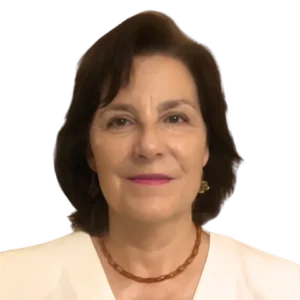
Sara Ortiz
Biography of Sara Ortiz
A civil engineer (specializing in roads, canals, and ports) who graduated from the UPC, she received the Cirit Award for scientific spirit while still a teenager and later served as a university professor of Algebra and Numerical Analysis.
However, science alone was not enough for her; she went on to earn a Master’s degree in the History, Logic, and Philosophy of Science from the UNED.
In her professional life as an engineer, she focuses on an essential resource: water—specifically specializing in water purification in Palma de Mallorca, in the Balearic Islands, where she currently resides.
On the humanistic side, she has been involved for over 30 years with the philosophy school New Acropolis (Nueva Acrópolis), where she serves as an instructor, volunteer, and coordinator. She has authored dozens of articles and delivered hundreds of lectures on philosophy, science, and ethics.
17:00 UTCWatch on Instagram - 16Nov · Mon
 SpainIn English
Science and Philosophy at the Dawn of Contemporary Science
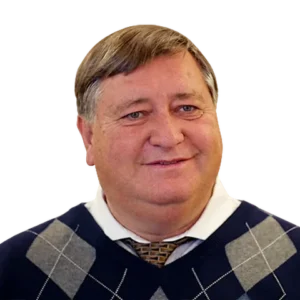
Harry Costin
18:00 UTCWatch on Instagram - 17Nov · Tue
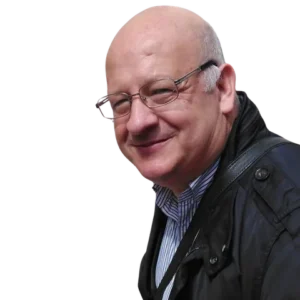 PortugalIn Spanish
Quantum Physics and the Upanishads
José Carlos Fernández
18:00 UTCWatch on Instagram - 18Nov · Wed
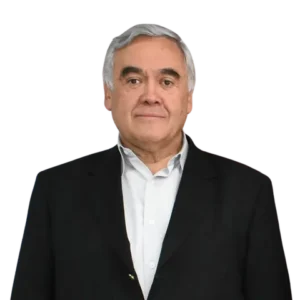 EcuadorIn Spanish
Philosophy and Science in Giordano Bruno
For Giordano Bruno, the philosopher from Nola, natural philosophy and metaphysics are not separate: to understand the physical structure of the cosmos is to contemplate the infinite unfolding of the divine.
This interview explores his most revolutionary ideas: an infinite universe—devoid of any regions empty of substance or life, and containing a multitude of suns and planets—as well as the unity of matter and form, wherein form is not external to matter but rather hidden within it, unfolding from it.
These ideas evolve into a philosophy of life—the "heroic frenzies"—a yearning to break through the confines of convention and prevailing dogmas, in order to attune oneself to the universality of the cosmos and embark on a quest to uncover its mystery.
Leonardo Santelices
Biography of Leonardo Santelices
Leonardo Santelices Ahumada (Santiago, Chile, 1954). Based in Ecuador since 1984, he has a career spanning more than five decades dedicated to practical philosophy and cultural promotion, having become involved with the International Organization New Acropolis in Chile in 1972. He is the founder of the Ecuadorian Educational Corporation New Acropolis and serves as International Director of the FIDIAS International Center for Studies in Architecture and the Visual Arts.
16:00 UTCWatch on Instagram - 19Nov · Thu
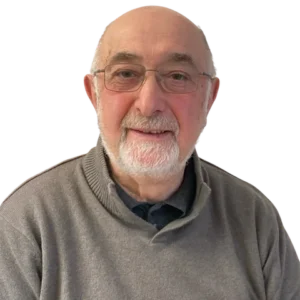 FranceIn Spanish
Philosophical language as a bridge between mythical language and scientific language
Language is not merely an instrument for communication; it is the intermediary that makes the understanding or interpretation of meaning possible. Through language, individuals are able to interpret reality and find meaning in life.
There are three modes of language: mythical language, the discursive language of communication, and scientific language.
Between mythical language—which is multidimensional—and scientific language—which is univocal—philosophical language acts as a bridge.Fernando Schwarz
Biography of Fernando Schwarz
Fernando Félix Schwarz is of Swiss nationality.
He holds degrees in philosophy and art history from the University of Buenos Aires. Having lived in Paris for many years, he pursued studies in anthropology there, completed training in Egyptology at the University of Lyon III, and was awarded the Silver Cross for Arts, Sciences, and Letters in Paris.
For twenty years, he directed the module on Religious Anthropology at the School of Anthropology in Paris.
He has spent the last forty years studying the mythical and symbolic structures of both traditional and modern societies.
His research has resulted in numerous books, and his major works have been translated into several languages.
16:00 UTCWatch on Instagram - 20Nov · Fri
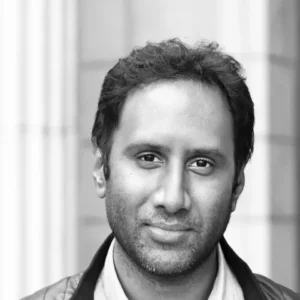 South AfricaIn English
Can satellites contribute to a better world? Technology, ethics, and human decisions
This topic explores how remote-sensing satellite imagery can serve as both a scientific and an ethical tool for revealing patterns of environmental inequality in the Greater Gauteng Urban Region of South Africa.
By mapping the distribution of resources—such as vegetation, water, and energy infrastructure—as well as environmental risks—such as pollution and heat islands—remote sensing provides a powerful visual foundation for promoting changes in public policy and advocating for environmental justice.
We argue that environmental justice is not merely a technical or political issue, but also a moral imperative rooted in the philosophical principles of distributive justice and the common good.
Laven Naidoo
Biography of Laven Naidoo
Dr. Laven Naidoo earned his PhD in Geoinformatics from the University of Pretoria in 2017.
Over the past 15 years, he has specialized in the use of Earth observation technologies to study and monitor vegetation in savannas, forests, and wetlands, as well as urban dynamics.
At the Gauteng City-Region Observatory (GCRO), he serves as a senior researcher, leads the Geographic Information Systems (GIS) unit, and directs the research stream on Urban Data Science.
He also holds a Y-rating from South Africa’s National Research Foundation (NRF)—a recognition awarded to young researchers with exceptional scientific potential.
Furthermore, he serves on the NRF’s Specialist Evaluation Panel for Earth Sciences and holds the position of extraordinary professor at the University of Pretoria.
In addition, he is a research associate at the University of the Witwatersrand’s (Wits) MIND Institute, which focuses on understanding artificial intelligence through collaborative research.
16:00 UTCWatch on Instagram - 21Nov · Sat
 BrazilIn Portuguese
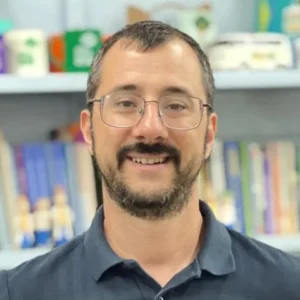
Philosophy, Science, and the Big Questions
Every major scientific answer does not close a question; rather, it reopens it at a deeper level. When Copernicus displaced the Earth from the center, we discovered a larger universe. When Darwin placed us among the kin of other animals, we discovered the history of life. When quantum physics revealed that there is no such thing as an external observer, we found ourselves facing a question that no one yet knows how to answer.
In this lecture, Felipe Ribeiro explores three questions that have spanned the entire history of humanity—where we are, where we come from, and who we are—and demonstrates why science, on its own, is not enough. Science discovers what is; philosophy teaches us how to live with what we discover.
A reflection on what we know, what remains unknown, and why the quality of our questions is a better measure of our knowledge than the firmness of our certainties.
Felipe Ribeiro
Biography of Felipe Ribeiro
Felipe Ribeiro has been a professor at the Federal Rural University of the Semi-Arid Region (UFERSA) in Brazil since 2009. He holds a degree in Animal Science and a PhD in Aquaculture. He has served as Pro-Rector for Extension and Culture and as Chief of Staff to the Rector.
He also coordinates the *Ciência para Todos* (Science for All) program at UFERSA—an initiative that has received various national and international accolades, including:
- 2013: The Paulo Freire Award from the Mercosur Educational Sector Support Program.
- Since 2013: Recognition as a "social technology" by the Social Technologies Bank of the Banco do Brasil Foundation.
- 2017: Winner of the Brazilian Creative Learning Challenge.
- 2018: Recognition by the World Bank as an innovative initiative in teacher training.
He has been a member of the Lemann Foundation’s Leaders Network since 2019 and served as a visiting professor at the Massachusetts Institute of Technology (MIT) in 2022. He was also named a 2025 LED Ambassador.
Since 2015, he has been a volunteer with the international organization New Acropolis at its branch in Mossoró, Rio Grande do Norte (Brazil). In this capacity, he serves as a volunteer instructor, teaching subjects such as Ethics, Life in Society, Philosophy of History, Introduction to Eastern Wisdom, Psychology, Moral Philosophy, Symbolism, and the History of Ancient Philosophy.
16:30 UTCWatch on Instagram - 22Nov · Sun
 RomaniaIn English
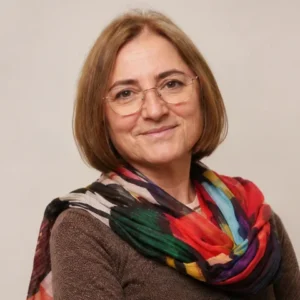
The air we share: what can’t we see, and why should we care?
Carmen Chifiriuc
Biography of Carmen Chifiriuc
Mariana Carmen Chifiriuc is a professor of Microbiology and Immunology at the Faculty of Biology of the University of Bucharest (Romania), where she also serves as Vice-Rector for Research, coordinator of the Research Institute, and supervisor of doctoral theses.
She began her scientific career in 1997 at the Cantacuzino Institute in Bucharest and completed research stays at the Pasteur Institutes in Bangui and Paris. Between 2001 and 2009, she served as the national data coordinator for Romania within the European Antimicrobial Resistance Surveillance System (EARSS).
She has participated in over 75 national and international research projects, serving as principal investigator or a key team member in more than 25 of them. Her scientific output includes over 500 publications, 15 books, 45 book chapters, and 14 patents.
Her primary research interests focus on antibiotic resistance, microbial virulence mechanisms, the interactions between infectious agents and the human body, the role of the microbiota in various diseases, and the development of new antimicrobial strategies and microbiological diagnostic methods.
Her professional career integrates scientific research, university teaching, and innovation within the fields of biomedicine and ecology.
16:00 UTCWatch on Instagram