

What is time, and what do we do with it? The first question has occupied science for centuries; the second is one of the oldest in philosophy. With that horizon, the World Philosophy Day activities began in Brazil, this year centred on the theme “Philosophy and Science”.
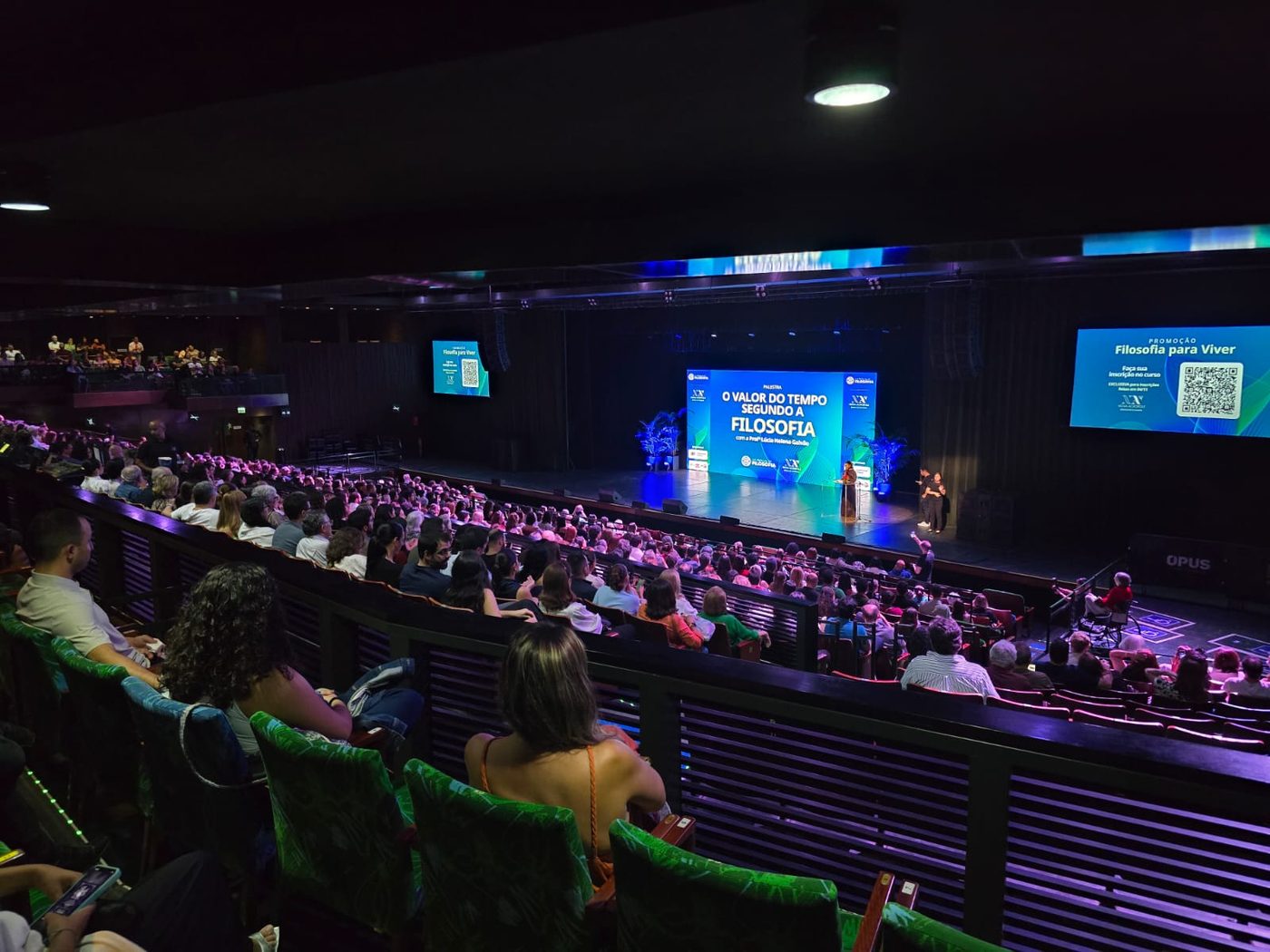
On 4 November, 1,180 people gathered at the Teatro Riachuelo in Natal for the lecture “The value of time according to philosophy”, given by teacher Lúcia Helena Galvão.
The lecture invited the audience to think of time as the space in which life is built: the difference between clock time and the way each person spends their days, and the place that choices, priorities, presence and the meaning of life hold within it.
It is a perspective that completes that of science. Since Einstein, physics has shown that time does not pass in the same way for every observer, and clocks measure it with ever greater precision, but they cannot tell us how to spend our days. That question calls for philosophy, and this year’s celebration is about that very encounter between the knowledge that investigates and the thought that seeks meaning.
A volunteer teacher at New Acropolis for more than 30 years, Lúcia Helena Galvão has given more than a thousand lectures in Brazil and abroad, and is the author of books and plays.
The same lecture will also be given in Fortaleza (16 November), João Pessoa/Cabedelo (18 November) and Recife (19 November), as part of New Acropolis’s programme in Brazil.